
Inside Icherisheher: Baku’s walled Old City
Icherisheher still feels like a fortress: a hilltop quarter by the sea, ringed by stone walls, where the city of Baku first took shape.
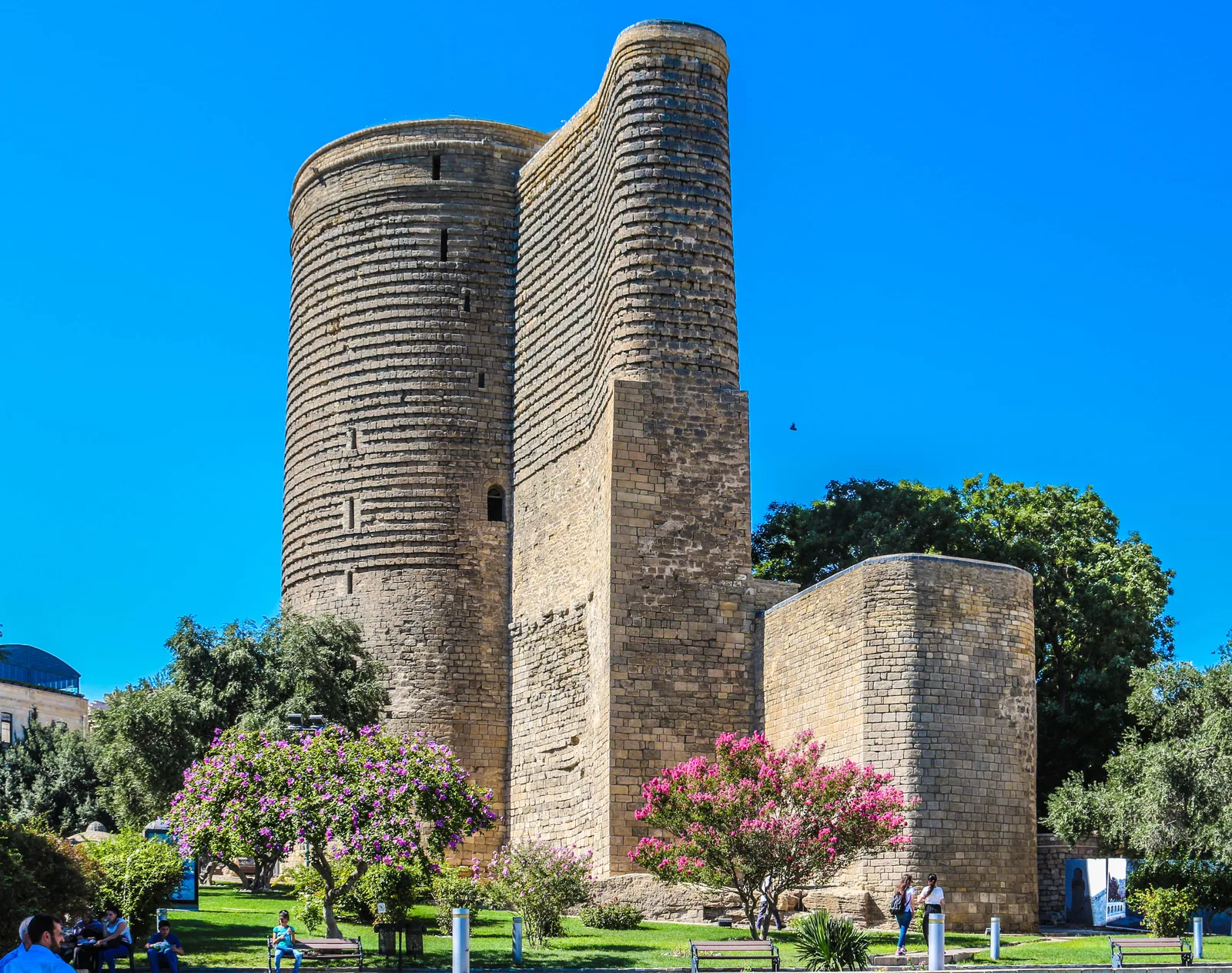
Baku began on a hill beside the sea, in the quarter now known as Icherisheher. Guides and locals also call it the Inner City, the Old City, or even the Baku Acropolis, but the place itself is simply the city’s historic core — and its oldest residential neighbourhood.
A living district on the World Heritage list
Settlement here reaches back to the Bronze Age. By the 8th–11th centuries the area was fully inhabited. In 1977 it was designated a historic and cultural reserve; in 2000 Icherisheher was added to the UNESCO World Heritage list.
Landmarks packed into a tight maze
Behind the walls — some stretches of them now partly ruined — stand a remarkable group of monuments. The Palace of the Shirvanshahs is the centrepiece, a complex that includes a mausoleum, the Divankhane and a mosque. The Maiden Tower, Giz Galasi, is the other silhouette visitors remember first. Mosques and minarets appear among the lanes, along with the remains of caravanserais and bathhouses.
The street plan tells its own story. Space was always scarce, so houses were built wall to wall. There are no gardens to speak of. Courtyards are tiny, and the passages between them shrink into alleys and dead ends.
Why it is called a fortress
The nickname is earned. Icherisheher is still enclosed by a well-preserved defensive wall. Baku once had two such walls, separated by moats. In the early 19th century the city expanded so quickly that the outer wall was taken down to make room for houses. The inner wall remains, with 25 towers and five gates.
From royal capital to a city beyond the walls
A building boom started in the 15th century, after the Shirvanshahs moved their capital from Shamakhi to Baku. The palace that now bears their name dates from that period. Through the 17th–19th centuries Baku still did not extend beyond Icherisheher: palaces and ordinary houses stood inside the same enclosure. From 1747 to 1806 this was the capital of the Baku Khanate.
Only the oil boom pushed the city outside the fortress line. In the 1930s more than 900 buildings stood within the walls; by the early 21st century about half of them were left.
Photo: Sefer azeri, Wikimedia Commons, CC BY-SA 4.0.